Dependency Injection and the Dependency Inversion Principle are two ideas Laravel developers mention often, but they are not the same thing. Understanding the difference helps you build code that is easier to test, easier to replace, and much safer to evolve as a product grows.
What Dependency Injection solves
Dependency Injection means a class receives the collaborators it needs instead of creating them internally. In Laravel, that usually happens through constructor injection and the service container resolves the dependency for you.
class UserController
{
    public function __construct(
        protected MailerService $mailer
    ) {}
}
This approach already improves maintainability because your controller no longer decides how to build the mailer. Laravel handles that wiring and the class focuses on behavior.
Where Dependency Inversion adds value
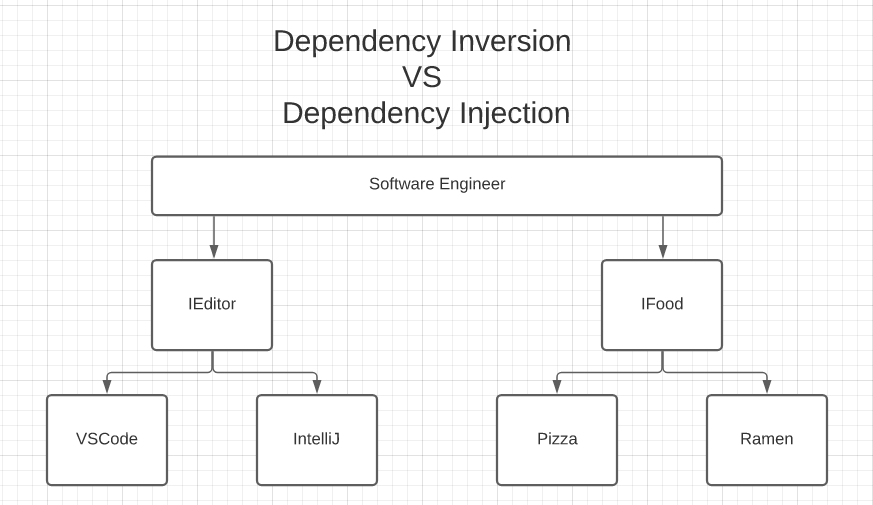
Dependency Injection alone still allows tight coupling if you inject a concrete implementation everywhere. Dependency Inversion goes one step further: higher-level code depends on an abstraction rather than a specific class.
interface MailerInterface
{
    public function send(array $payload): void;
}

class UserController
{
    public function __construct(
        protected MailerInterface $mailer
    ) {}
}
Now the controller does not care whether the implementation uses SMTP, Mailgun, or SendGrid. That decision can change in one place instead of being repeated across the codebase.
How Laravel makes this practical
Laravel’s service container makes the abstraction-first approach straightforward. You bind the interface to the implementation in a service provider and let the framework resolve it where needed.
public function register(): void
{
    $this->app->bind(
        MailerInterface::class,
        SendGridMailerService::class
    );
}
This is especially useful in products that have external integrations, multiple billing providers, queue drivers, or notification channels. The more likely a dependency is to change, the more valuable an abstraction becomes.
When not to over-engineer it
Not every class needs an interface. If a class is small, self-contained, and unlikely to have multiple implementations, injecting the concrete class can be enough. Adding abstractions everywhere creates noise and makes a codebase harder to read.
- Use constructor injection by default.
- Introduce an interface when you expect multiple implementations or need stronger testing boundaries.
- Prefer explicit, business-relevant abstractions over generic “manager” or “service” interfaces.
Why this matters for testing
Dependency Inversion improves testability because you can replace a concrete implementation with a fake or mock without touching unrelated parts of the system. That leads to faster unit tests and more reliable boundaries between domain logic and infrastructure.
If your team is also working with subscriptions or external payments, the same principle applies to billing flows and third-party APIs. The Stripe example in this Laravel Cashier guide benefits from the same separation of concerns.
Key takeaway
Dependency Injection helps Laravel classes receive what they need. Dependency Inversion helps them depend on stable contracts instead of unstable implementations. Used together, they produce code that is easier to maintain, easier to test, and much easier to adapt when requirements change.